
Does My Electrical Panel Need to Be Replaced?
This page is for general education only. It is not a substitute for a licensed electrician inspecting your specific panel. Every panel is different. If you have concerns, call us for a free on-site evaluation.
Circuit breakers are mechanical devices. They rely on springs, bimetallic strips, and contact surfaces that wear out over time. After decades of thermal cycling, springs lose tension, contacts oxidize, and internal lubricants dry out. The breaker still flips on and off by hand, but its ability to trip automatically when it needs to declines. No panel manufacturer publishes a specific calendar lifespan for residential breakers, but the mechanical wear is real and cumulative.
Most Denver-area homes were built between the 1950s and 1990s. The original panel that went in with the house may still be the one you're using. If it's 30 or 40 years old, the breakers inside it may not trip when they need to.
Not All Panels Are Equal
Square D, General Electric, Siemens, Murray, and Cutler-Hammer panels were installed in Denver-area homes during the same decades. A well-maintained Square D from 1978 may be aging, but it doesn't carry the same documented concerns as the panels on this page.
The panels below are here for specific reasons: independent lab testing that revealed defects, court findings of fraud, design limitations that created real hazards, or technology too old to accept the safety features current code requires. If you think your panel is one of these, you should have a licensed electrician check it.
Denver's Electrical Panel History
Each decade of Denver's building boom used whatever panel was cheapest and code-compliant at the time. Here's what went into homes from the 1900s through today.

Panels With Known Safety Issues
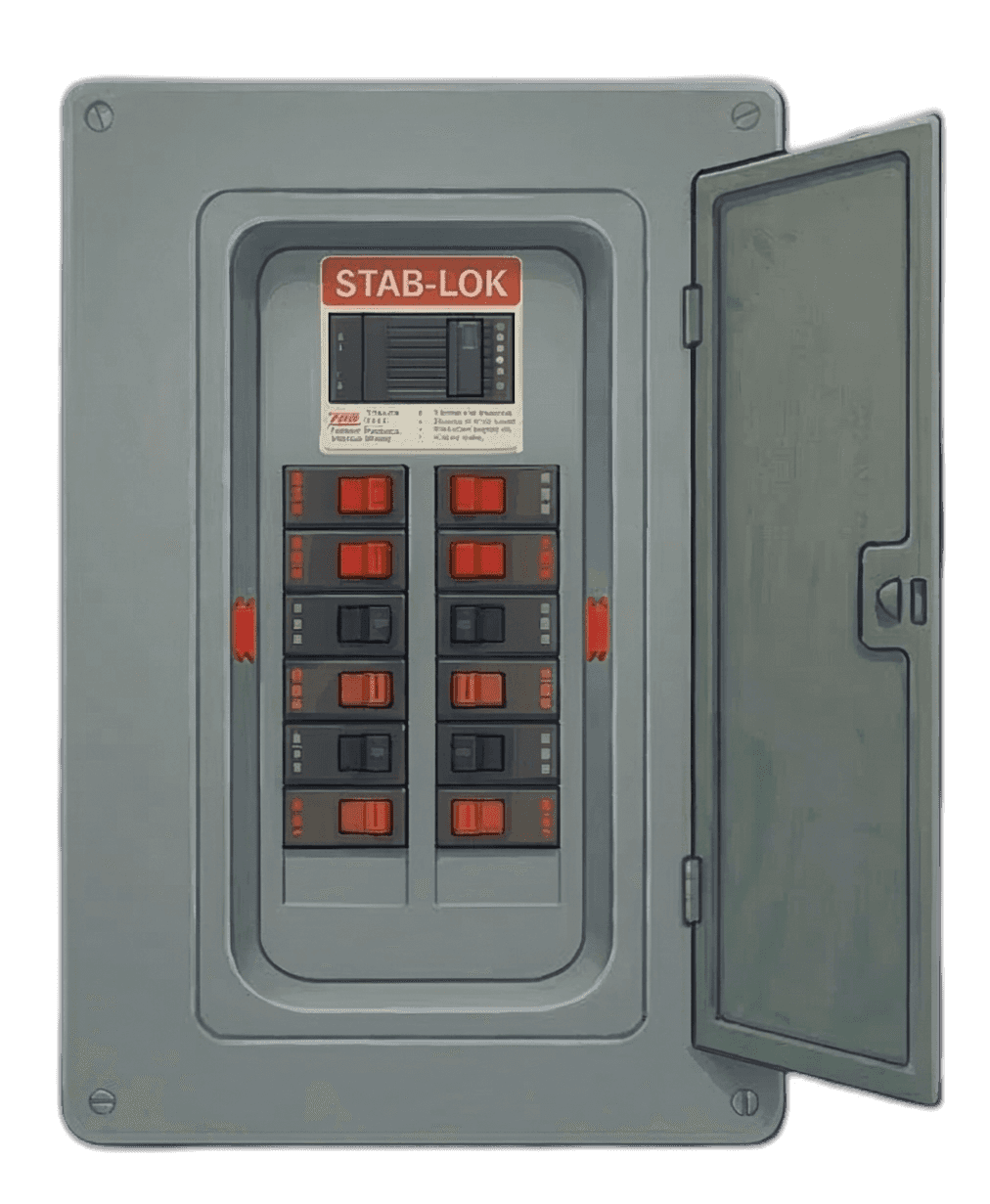
Federal Pacific (FPE) Stab-Lok
Installed 1950s through 1980s
Breakers fail to trip up to 65% of the time. Fraud proven in court. UL listing revoked.
- Panel label says "Federal Pacific Electric" or "FPE"
- Breakers stamped "STAB-LOK"
- Red or orange breaker handles
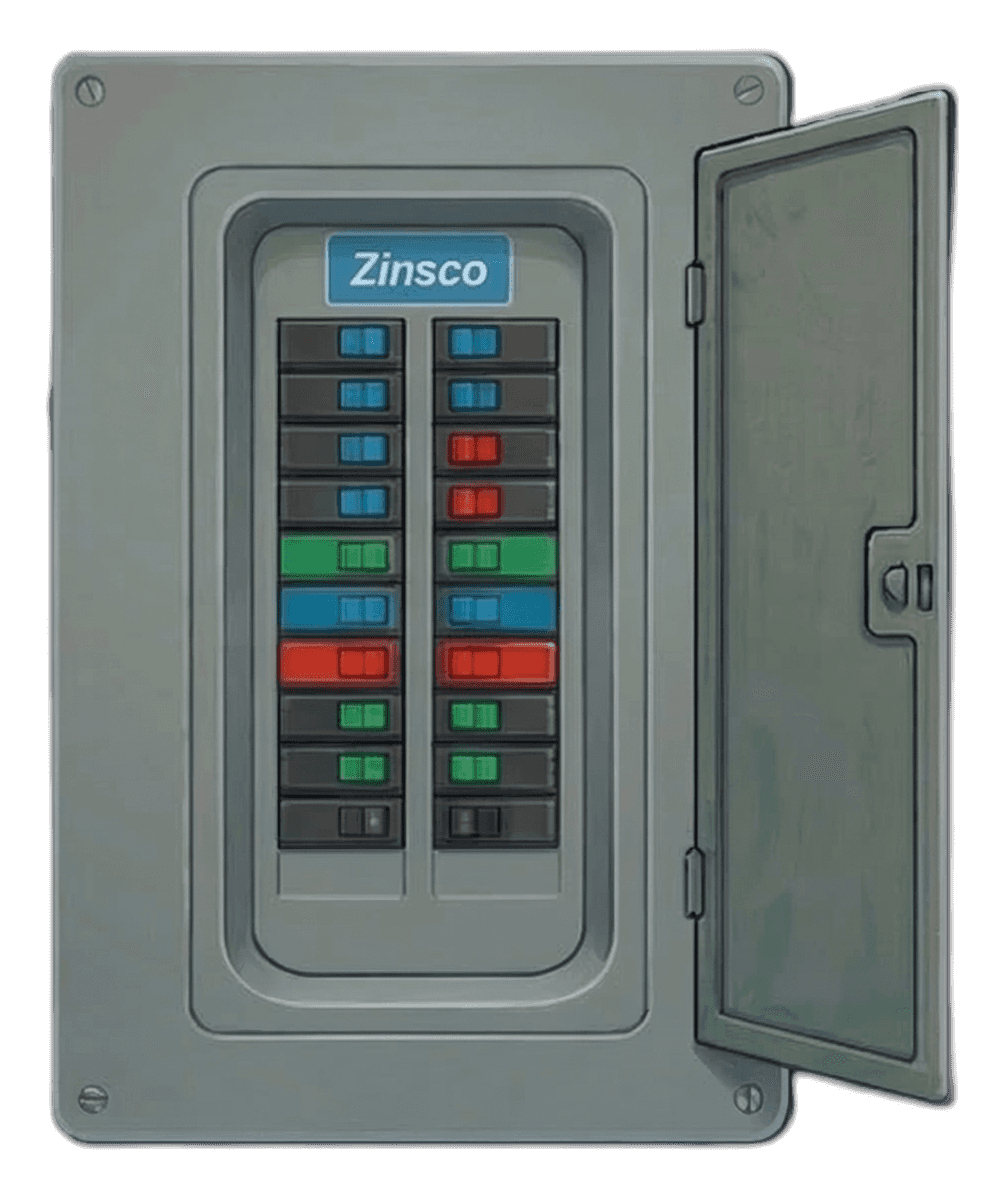
Zinsco / GTE-Sylvania
Installed 1950s through 1980s
Breakers melt to aluminum bus bars. Can't be turned off. Arcing and overheating documented.
- Colored breaker handles: red, green, blue
- Label says "Zinsco," "Sylvania," or "GTE Sylvania"
- Breakers arranged in a single vertical row
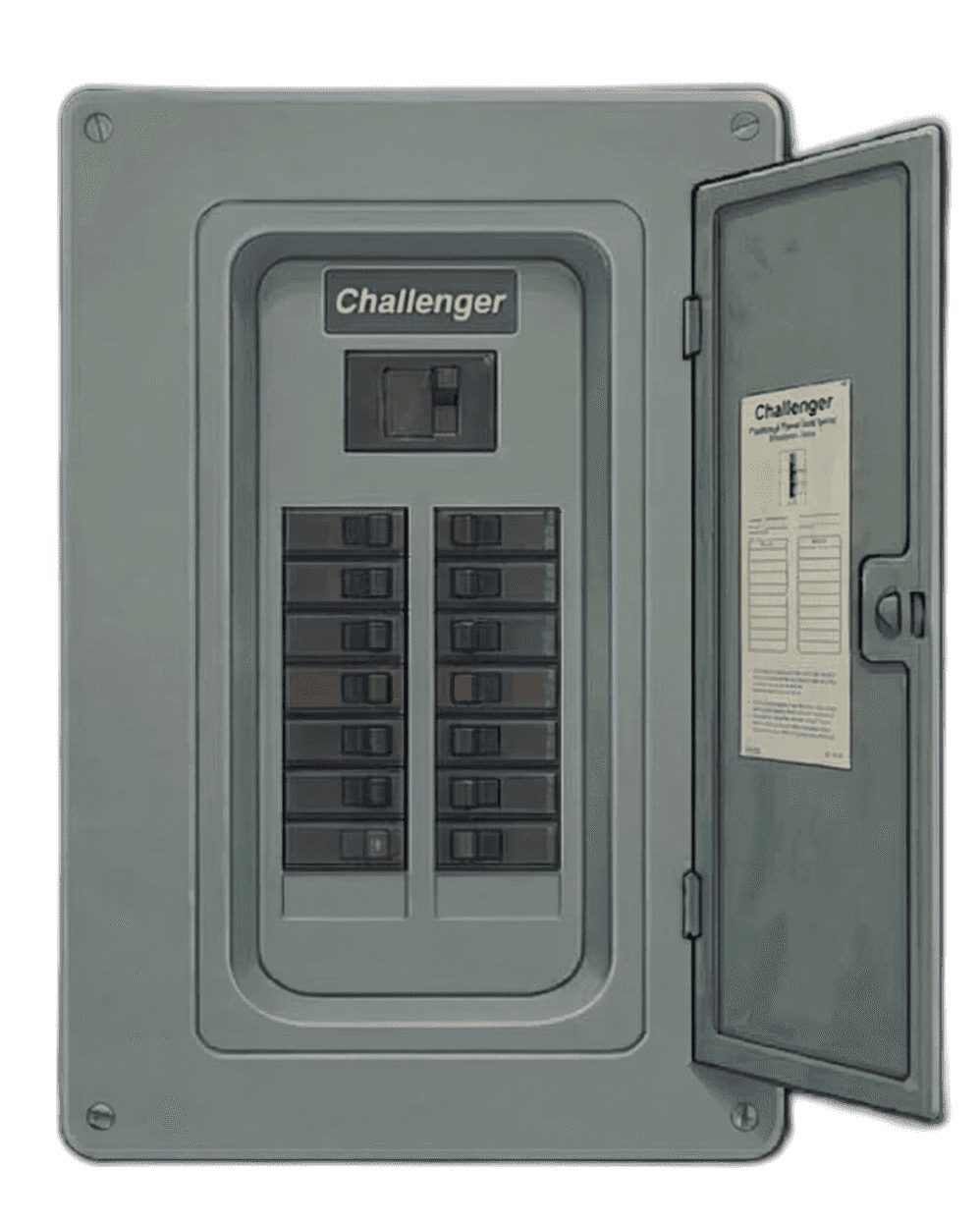
Challenger
Installed 1980s through 2000s
Two distinct types with different risk levels. Early models are Zinsco rebadges. Insurance flags the brand name regardless.
- Label says "Challenger" on the panel door or interior
- Often found in homes built in the 1980s and 1990s
Outdated Panels
These panels aren't defective. They're past their useful life. Connections loosen over decades, internal components degrade, and they can't accept the safety features that current code requires: arc-fault protection, surge protection, or an exterior emergency disconnect. Replacement parts range from scarce to nonexistent.
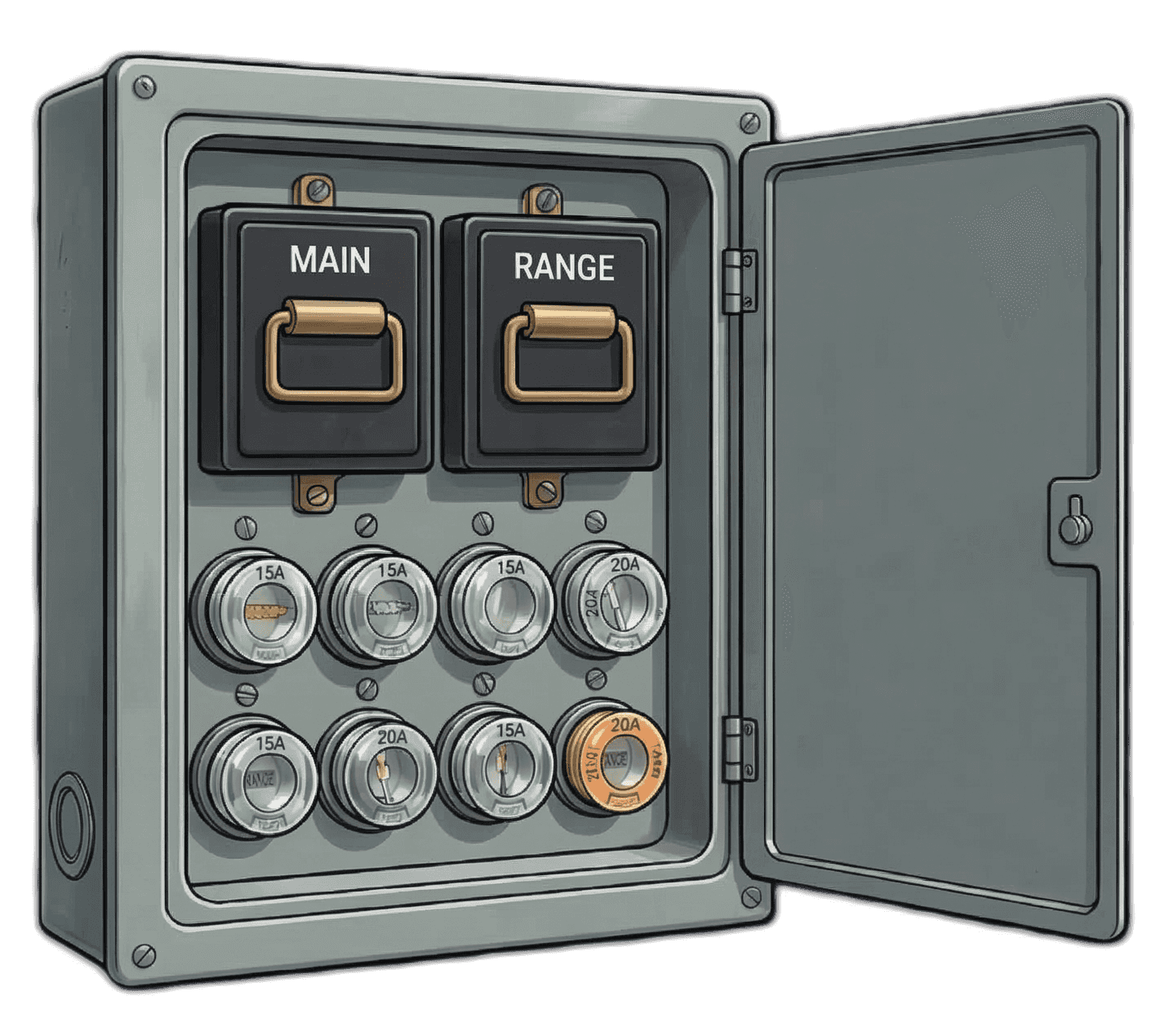
Fuse Boxes
Pre-1960s
Single-use fuses, 60-amp service, 4-8 circuits. Decades of overfusing have created real hazards in many of these panels.
- Round screw-in glass fuses instead of breaker switches
- Small metal box, often in the basement
- Limited to 60 amps in most cases
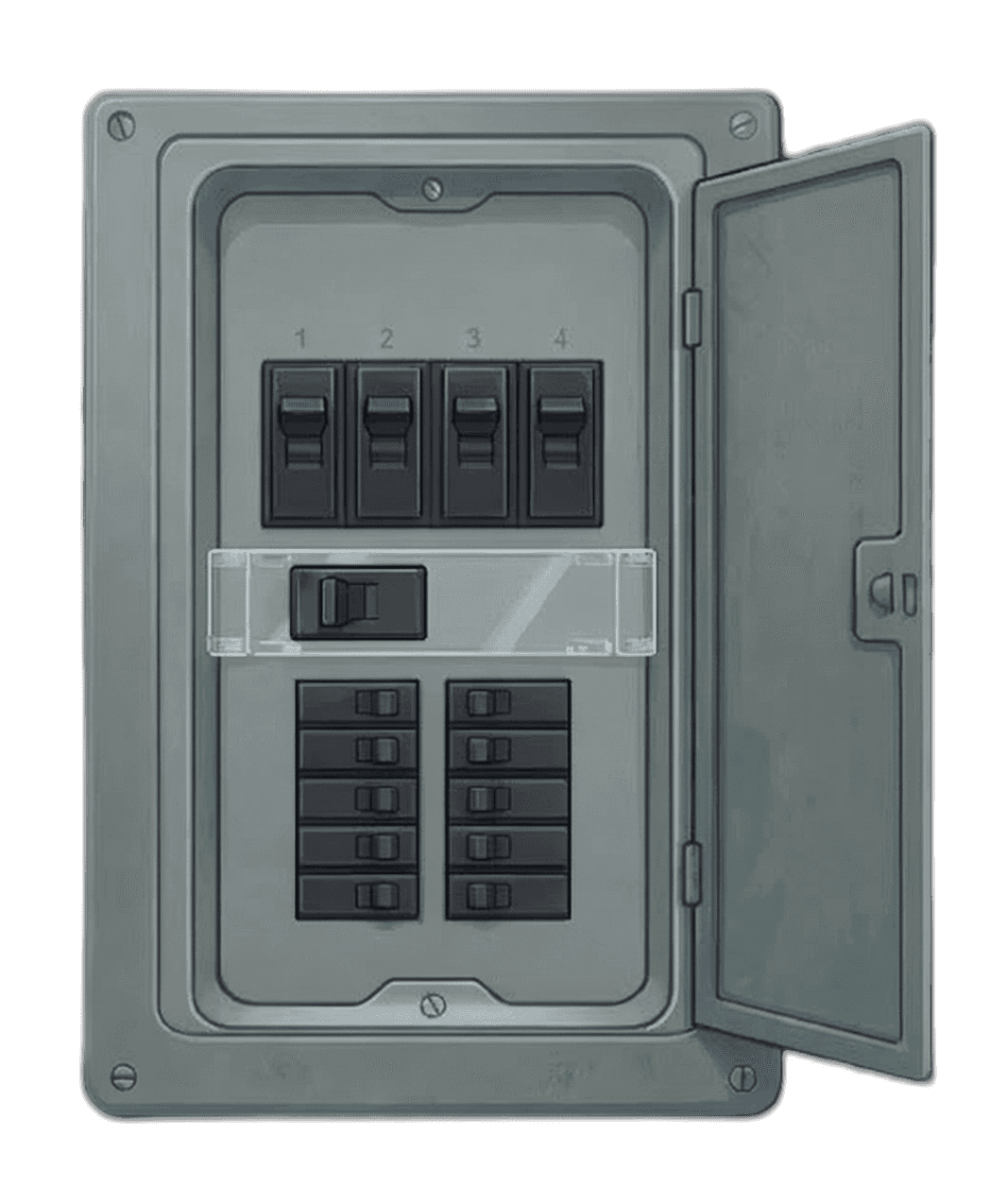
Split-Bus Panels
1950s through 1980s
No single main breaker. Up to six throws to cut all power. The code changed because our understanding of emergency safety evolved.
- No single main breaker at the top
- Multiple large breakers in the top section
- You have to flip 3 to 6 breakers to shut off all power
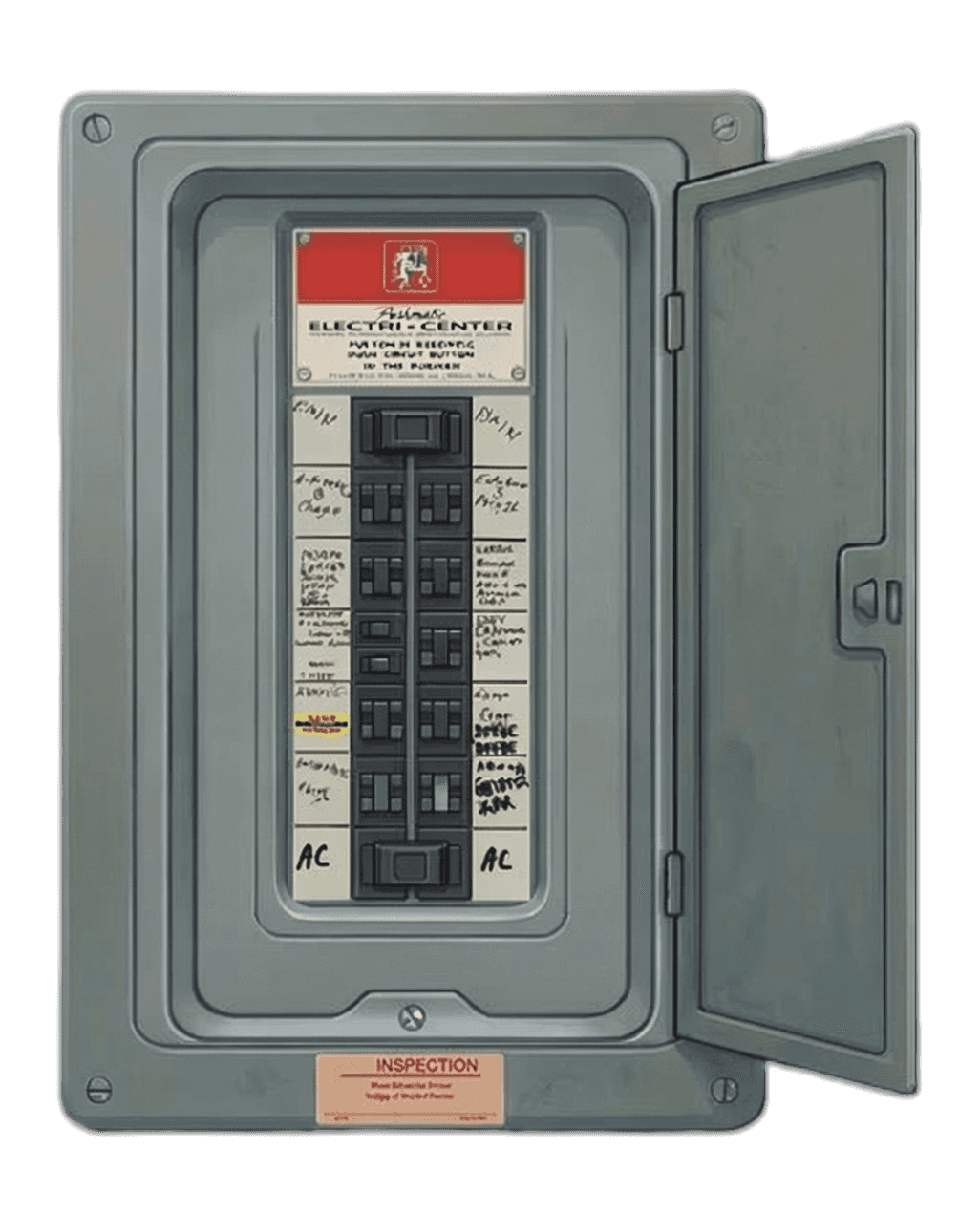
Pushmatic / Bulldog
1950s through 1980s
Push-button breakers instead of toggles. Internal grease hardens over decades. Mechanical degradation is the concern.
- Breakers are push buttons, not toggle switches
- Label says "Pushmatic" or "ITE" or "Bulldog"
- Breakers push in to reset instead of flipping
Panels at a Glance
This table summarizes the key differences. Each panel type has a full guide with identification photos, Denver neighborhood data, insurance implications, and replacement details.
| Panel Type | Era | Risk Level | Key Concern | Guide |
|---|---|---|---|---|
| Federal Pacific (FPE) | 1950s–1980s | 🔴 Fire Hazard | Breakers fail to trip 51-65% of the time. Fraud. UL listing revoked. | Guide |
| Zinsco / GTE-Sylvania | 1950s–1980s | 🟠 Safety Hazard | Breakers melt to aluminum bus bar. Arcing and overheating. | Guide |
| Challenger | 1980s–2000s | 🟡 Safety Concerns | Two types: early Zinsco rebadges and later models. Both flagged by insurers. | Guide |
| Pushmatic / Bulldog | 1950s–1980s | 🔘 Obsolete | Push-button breakers with hardened grease. Mechanical degradation. | Guide |
| Split-Bus | 1950s–1980s | 🔘 Obsolete | No single main disconnect. Up to six throws to kill power. | Guide |
| Fuse Boxes | Pre-1960s | 🔘 Obsolete | 60A service, single-use fuses, decades of overfusing risk. | Guide |
What's Next
You Recognized Your Panel
Pick it from the guides above. Each one covers identification details, what the actual problem is, insurance and home sale implications, and what replacement looks like.
You're Not Sure What You Have
Open your panel door and take a photo of the label and the breakers. Text it to us at (303) 775-3221. We'll tell you what it is. No charge.
Your Home Inspector Flagged It
Check the report for the brand name or description. Match it to the guides above, then call us for an evaluation.
Frequently Asked Questions
How do I know if my electrical panel is dangerous?
Open your panel door and look at the breakers, labels, and brand name. Federal Pacific (FPE) Stab-Lok panels have independent lab testing showing breaker failure rates between 51% and 65%. Zinsco panels have documented aluminum bus bar failures that cause overheating and arcing. Challenger panels have two distinct types with different risk levels. Pushmatic panels use push-button breakers whose internal grease hardens over decades. If you see any of these brand names, have a licensed electrician evaluate it.
What electrical panels have been recalled?
No residential electrical panel has ever been subject to a full Consumer Product Safety Commission (CPSC) recall. Federal Pacific was investigated but the CPSC closed the case in 1983 due to budget constraints. Zinsco was never formally investigated. Challenger had a narrow 1988 recall covering approximately 9,000 GFCI breakers, not the panels themselves. Pushmatic has no CPSC action at all. The word 'recalled' is widely misused by contractors. The actual hazards are documented through independent lab testing, court findings, and engineering analysis.
Will my insurance drop me because of my electrical panel?
It depends on your carrier and your panel. Colorado insurers increasingly flag Federal Pacific, Zinsco, Challenger, and Pushmatic panels during underwriting or at renewal. Fuse boxes draw scrutiny for their 60-amp service capacity. The triggers vary: FPE and Zinsco are flagged for documented defects, while Pushmatic and fuse panels are flagged for age and inadequacy. If your panel gets flagged, you may receive a non-renewal notice with 30 to 60 days to replace it. Some carriers refuse to write new policies on homes with these panels.
How much does it cost to replace an electrical panel in Denver?
It depends on the scope. A straight panel replacement where the existing service entrance is in good shape is a different project than upgrading from 100 amps to 200 amps with a new meter base. Panel size, wiring condition, and local permit requirements all factor in. We provide free on-site estimates. See our cost page for more detail on what affects pricing.
How long does an electrical panel replacement take?
The on-site work typically takes one full day. Power is off for most of that day. The full process from first visit through final inspection takes longer when you factor in permits (a few days) and Xcel Energy coordination for the meter disconnect and reconnect (typically 5 to 10 business days). Total timeline from estimate to power restored is usually 2 to 4 weeks.
This page is for informational purposes. References to the National Electrical Code (NEC) are based on the 2023 NEC as adopted by Colorado at the time of writing and are for context only. They do not replace the currently adopted code in your jurisdiction. Your local Authority Having Jurisdiction (AHJ) and electrical inspector determine what applies to your project. Electrical work should only be performed by a licensed electrician.
Not Sure What You Have?
Text us a photo of your panel door. We'll tell you what it is and whether it needs attention. You can also learn more about what a service change involves.
(303) 775-3221