
Why Conifer homeowners call an electrician
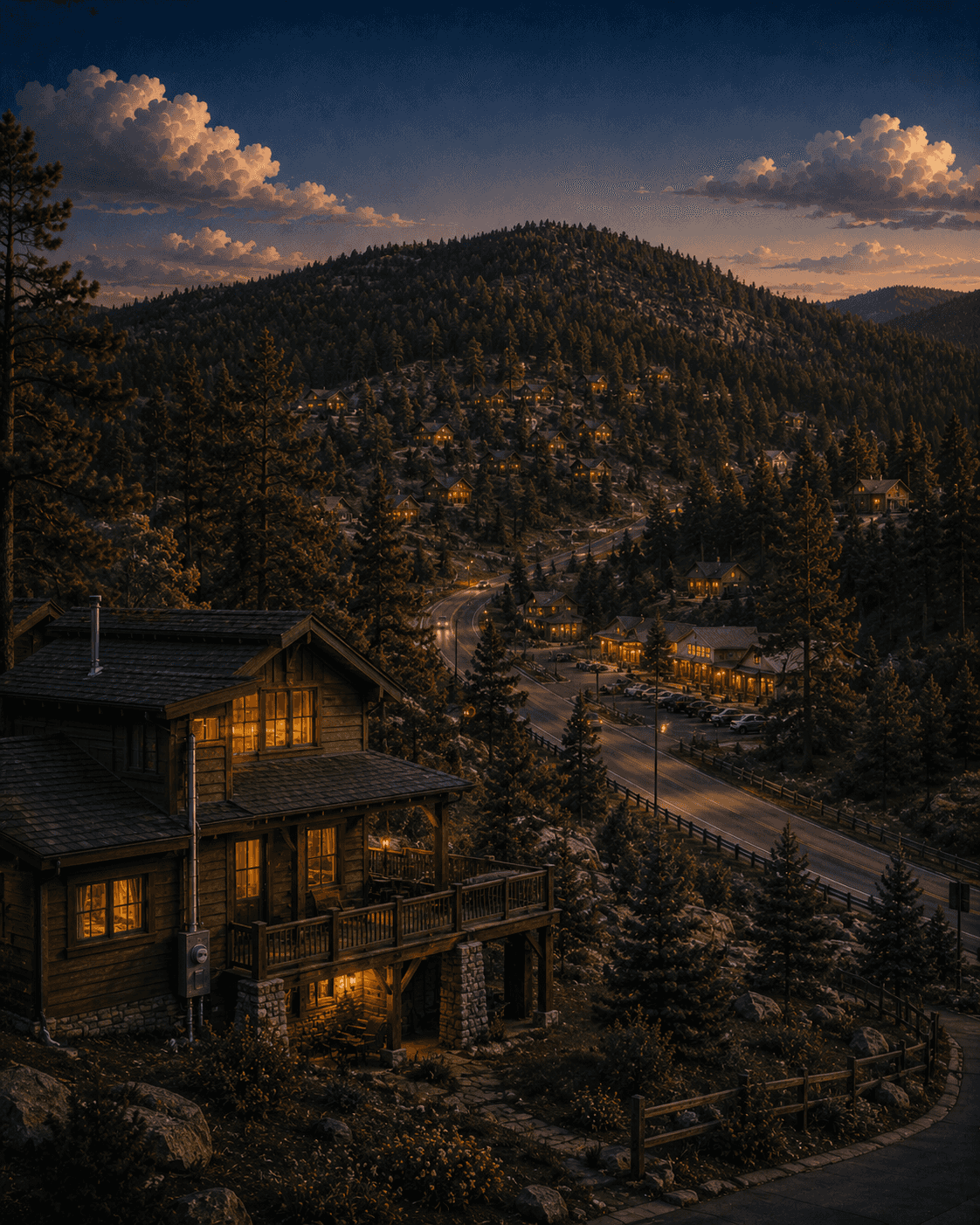
A home at the end of a long Conifer driveway, up around 8,300 feet, runs on its own well and its own septic system. There's no city water to fall back on and no municipal sewer. That changes what an electrical problem means here. Across the 285 Corridor, two concerns come up again and again. The first is keeping a self-supplied home livable when the power is out for days. The second is an older service, often from a 1970s cabin, that's too small for how the home is used now. Where your home sits on the cabin-to-custom range usually decides which one you're facing, but the remote, self-reliant reality is behind both.
When the power's out for days
In the metro, an outage is something you wait out. Up here it's different, because the home is its own water and sewer utility. The well pump runs on electricity, and so does the septic system. Lose power and you lose running water within hours. No drinking water, no showers, no flushing toilets. If the home heats with electric blowers or a heat pump, you lose heat too, and a winter outage adds a freezing risk to the home and its plumbing.
The outages run long for real reasons. During extreme wind and dry conditions, the grid may be shut off ahead of time to keep a downed line from starting a wildfire, a Public Safety Power Shutoff. The power goes fully off for the length of the event. After a wind event the lines can't just be switched back on either. Crews have to patrol miles of distribution line through rugged terrain and clear fallen timber before power is safe to restore, so an outage of hours routinely turns into a multi-day one. A home far up a mountain driveway, on a long, exposed overhead drop, is among the last to come back.
The electrical answer is a manual transfer switch for a standby generator. It's the code-compliant connection that lets a generator safely run the home's circuits, including the 240-volt well pump, without back-feeding the grid and endangering line crews. That's what keeps water, sanitation, and heat going when the power's out.
A 1970s service that's too small now
A 1970s mountain cabin was wired for a much smaller electrical era: basic lighting, a refrigerator, a small well pump. The modern household asks that same service to carry the well pump plus an electric vehicle (EV) charger, an induction range, a heat pump, or an addition. The gap shows up as breakers that trip, lights that flicker, or a quote that comes back saying the existing service can't take the new load. Much of Conifer's older stock came from a period when a smaller service was standard practice, so the older cabins along the 285 Corridor tend to run into this first.
The well pump is why capacity runs out faster here than in the metro. A deep-well submersible pump is a continuous 240-volt load you can't shed, because shedding it means losing the home's water. So a new load lands on a service that's already near its limit from the well pump, and there's less room left for it. A service change is what lets the home safely carry the well pump and the new load together. Whether a new load fits, and what service size you need, comes down to a load calculation, the only way to answer it for your home.
When an older cabin's service gets opened up, the original panel is sometimes replaced for more than capacity. It can be an obsolete brand with a documented design problem, such as Federal Pacific Stab-Lok or Zinsco, where breakers can fail to trip on an overcurrent. Replacing the service and the panel together is one project.
Which Conifer homes tend to have which concern
Conifer isn't a tract-subdivision town. The homes spread along the 285 Corridor, and they sort fairly cleanly by the decade they were built. Here's what each era tends to bring.
| Conifer home / era | Built | What that era commonly brings, and where to read more |
|---|---|---|
| The older mountain cabins and A-frames along the 285 Corridor | 1970s | Undersized services for a much smaller electrical era, now carrying a 240V well pump and modern loads. Sometimes an obsolete fire-hazard panel (Federal Pacific, Zinsco) behind it → service change |
| The established homes from the 1980s expansion | 1980s | Mid-era services between the legacy cabins and the modern customs. The common question is whether the service can carry the well pump plus today's added loads → service change |
| The newer custom homes from the 1990s and 2000s | 1990s–2000s | Modern services, generally sound. Here the issue isn't the panel; it's keeping a remote, self-supplied home livable when the power is out for days → transfer switch |
Not every old panel or old service is a problem. Square D, GE, Siemens (ITE), Murray, and Cutler-Hammer panels went into Conifer homes alongside the flagged brands and generally aren't the ones that get raised. And across the whole corridor, old home or new, the backup-power question is the one that cuts across all of it. The map points to what's common for an era, not to what's in your home. The only way to know what a specific home has, and what it needs, is to have someone look at it.
EV charging, heat pumps, and outbuildings
EV chargers, heat pumps, induction ranges, and additions are the modern loads that push a Conifer service past capacity. We size that up for your home and route it to a service change where it needs one. Conifer also has a lot of detached garages, workshops, and outbuildings, and getting power out to one, or feeding a basement finish or a dedicated EV circuit, is subpanel work.
What we handle so your project passes inspection. Working in Conifer means knowing the mountain realities a metro generalist gets wrong, and we handle them as part of the quote. The corridor sits across two utilities: CORE Electric Cooperative serves most of the rural expanse, and Xcel Energy covers parts of the corridor. Each has its own meter and interconnection requirements, so we confirm the serving utility for your address. Conifer also sits inside Jefferson County's wildfire zone, which sets where exterior electrical and generator equipment can be placed, and we site it to comply.
Two more mountain realities shape the work. Grounding here usually can't rely on a driven rod, because the ground is shallow soil over granite, so the county calls for a concrete-encased ground set with the foundation, and we set up the grounding the site needs. And a home hundreds of feet up a driveway needs a long service lateral with the voltage drop worked out over the distance, so getting service out to the property is itself part of the job. As an unincorporated community, Conifer permits through Jefferson County, and we pull the permit and coordinate the county inspection on every project.
Code and jurisdictional references on this page apply to Colorado's Front Range. If you're outside this area, do not rely on them; consult a locally licensed professional.
Common questions from Conifer homeowners
Who provides my electric service in Conifer?
The corridor is split between two utilities. CORE Electric Cooperative, a member-owned co-op formerly known as Intermountain Rural Electric Association, serves most of the rural area, and Xcel Energy serves parts of the corridor. Each has its own meter and interconnection requirements, so we confirm the serving utility for your address before we scope the project.
Why do outages last so long up here?
After a wind event, crews can't just switch the lines back on. They have to patrol miles of distribution line through rugged terrain and clear fallen timber before power is safe to restore. A remote home on a long overhead drop is among the last to come back, which is why an outage of hours often becomes a multi-day one and why backup power matters here.
Will a generator run my well pump?
A standby generator connected through a manual transfer switch can run the circuits that matter, including the 240-volt well pump, so you keep water, sanitation, and heat during an outage. The transfer switch is the code-compliant part that lets the generator power your home without back-feeding the grid. We size and install it for your home.
My 1970s cabin's service feels too small. Do I need a bigger one?
Maybe. An older mountain home often carries a service sized for a much smaller electrical era, and the well pump plus a modern add can push it past capacity. Whether yours can take a new load or needs a bigger service comes down to a load calculation, the only way to answer it for your specific home.
Does Conifer permit electrical work through a city or the county?
Conifer is an unincorporated community, so electrical work permits through Jefferson County rather than a city or the state. We pull the permit and coordinate the county inspection as part of the project.
Schedule a visit
Tell us what's going on, whether it's backup power before the next wind season or a service that can't keep up, and we'll set up an on-site assessment. We confirm who handles your project and what comes next, and you talk to a licensed electrician, not a call center.
Sources
- CORE Electric Cooperative and Xcel Energy — Public Safety Power Shutoff guidance, restoration practice after wind events, and serving-utility territories along the 285 Corridor
- National Electrical Code (NFPA 70), as adopted in Colorado — Article 702 (optional standby systems) and Article 250 (grounding and bonding)
- Jefferson County Building Safety Division — residential electrical permit and inspection authority, the Appendix Z wildfire zone, concrete-encased (Ufer) grounding, and long-service-lateral voltage-drop requirements
- Consumer Product Safety Commission — documented design patterns for Federal Pacific Stab-Lok and Zinsco panels
General educational information about residential electrical patterns in Conifer, Colorado. Every home is different, and nothing here is a diagnosis for any specific property. The only way to know a home's condition is an on-site look. Dunlap Electric Company, LLC · Colorado Electrical Contractor License #8223 · In the electrical trade since 1998.
Looking for another part of our service area? See our service area.