
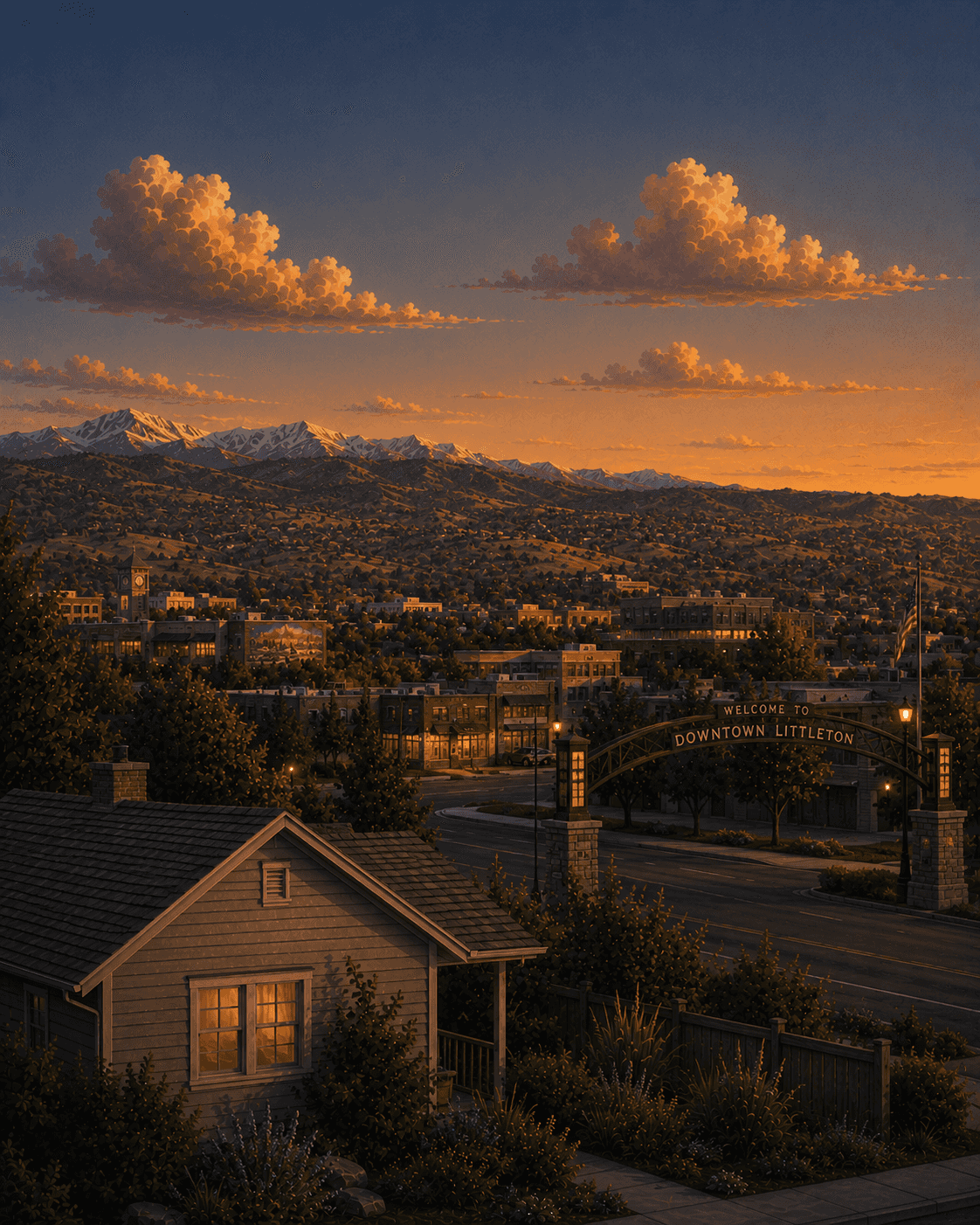
Why Littleton homeowners call an electrician
Littleton is the largest and most established older suburb south of Denver, and most of its homes went up in the postwar boom across the 1950s, 1960s, and 1970s. That stretches through long-settled neighborhoods such as Arapaho Hills, the homes along the West Littleton Boulevard corridor, and the streets around historic Main Street. A home from that era was wired for that era. Many were built on 60-amp or 100-amp service, with ungrounded two-prong circuits, sized for a smaller electrical life with a few appliances and no central air.
Those are good homes worth keeping current. The work that brings people to us is bringing one of them up to a modern load. An EV charger, a heat pump, an induction range, or an addition asks more of the service than the original design ever planned for, and the older service runs short. That's the project: a service upgrade, with the panel replaced as part of the same work, done by someone who knows these mid-century homes.
When the service can't carry a new load
The trigger is almost always the same. You buy an EV, get a heat-pump or induction-range quote, finish a basement, or plan an addition or an added unit. Then you find out the existing service can't take the new electrical load. An open breaker slot looks like spare room, but a spare slot and spare capacity aren't the same thing. What your service can carry depends on everything the home already draws. A load calculation totals that existing demand against the new load, and tells you whether it fits or the service needs a larger one.
A Level 2 EV charger is a continuous load, so the wiring and breaker for it get sized above the charger's running draw. Heat pumps and induction ranges add substantial continuous load too. Littleton's electric-ready code keeps EV readiness on a lot of owners' minds, so this is a common door into the same project. An added dwelling unit goes further. It runs as a second household with its own appliances and circuits, more than an already-undersized service is built to carry, which is what a service change sorts out.
Littleton's postwar stock is old enough to carry the era's documented problem-brand panels. The 1950s through 1970s window overlaps the split-bus era and the leading edge of the Federal Pacific Electric (FPE) Stab-Lok era, and an FPE or Zinsco-era panel turns up in the older neighborhoods. Where one does, it can become an issue at a home sale or an insurance review, and the panel gets replaced as part of the service upgrade.
That flagged panel is the exception here, not the headline. The reason most Littleton owners call is the undersized service itself, a 60-amp or 100-amp service that simply can't carry an EV charger, a heat pump, or an added unit. The panel is replaced as part of bringing the service up to a modern load.
Which Littleton homes tend to have which panel
Littleton sorts fairly cleanly by the years its neighborhoods were built, and the equipment common in each era sorts with them. Where it hasn't been swapped, here's what tends to be behind the cover.
| Littleton part of town | Built | What's commonly the real concern, and where to read more |
|---|---|---|
| The postwar and mid-century neighborhoods, such as Arapaho Hills and the West Littleton Boulevard corridor | 1950s–70s | Original 60-amp or 100-amp service and ungrounded circuits, now well behind a modern load: the service upgrade with a new panel. An FPE or Zinsco-era panel may turn up here and is replaced as part of the same work → service change |
| Older homes near downtown Littleton | late 1800s / early 1900s | The oldest wiring: original ungrounded circuits and occasional legacy knob-and-tube. Exterior work here can intersect the historic-district review → service change |
| The newer homes at the city's edges | newer | Generally sound panels. Here the issue is capacity for a modern load (EV, heat pump, addition, an added unit), not the brand → service change |
Littleton's dominant stock is that postwar 1950s–70s era, including its well-known mid-century modern neighborhoods, so this is the city where the undersized-older-service concern is most concentrated. Modernizing one of these homes is a real service upgrade by someone who knows the era.
Not every old panel is a problem. Square D, GE, Siemens, Murray, and Cutler-Hammer panels also went into these same Littleton homes, and they generally aren't the ones that draw concern. The table points to what's common for an era, not what's in your panel. The only way to know what you've got, and whether your service can carry what you're adding, is to have someone open it and look.
Backup power for an outage
Littleton sees the same prolonged Xcel outages as the rest of the metro, and interest in backup power rises in outage season. If you want to keep the essentials running when the power drops, we install manual transfer switches for standby generators, so you can run the circuits that matter.
What we handle so your project passes inspection. Littleton is a home-rule city whose limits straddle Arapahoe, Jefferson, and Douglas counties, and a "Littleton" mailing address can also fall in an unincorporated part of one of them. We confirm the right authority for your address before we scope the work. Most of incorporated Littleton is served by Xcel Energy and the unincorporated areas to the south by CORE Electric Cooperative, so we confirm the serving utility too. And the South Platte River runs through town, where a home in the mapped flood area may need electrical equipment below the flood elevation relocated. We account for all of this so the work is right and passes inspection.
Code and jurisdictional references on this page apply to Colorado's Front Range. If you're outside this area, do not rely on them; consult a locally licensed professional.
Common questions from Littleton homeowners
Does Littleton permit electrical work through the city or the county?
For a property inside the city limits, Littleton permits all electrical work through its own building division, whichever of the three counties it sits in. A "Littleton" mailing address can also fall in an unincorporated part of Arapahoe, Jefferson, or Douglas County, where the permit runs through the county. We confirm the correct authority for your address and pull the permit as part of the work.
Can my current service handle an EV charger or a heat pump?
That depends on your home's full electrical load, not an open breaker slot. An EV charger or heat pump is a continuous load added on top of everything else. We run a load calculation to confirm whether your service can carry it or needs to be upgraded to a larger service.
My home is from the 1960s. Does the panel have to be replaced?
Not always. Some panel brands from that era carry a documented problem and are worth replacing. Others from the same years are generally sound. More often in Littleton the question isn't the brand at all, it's whether the original service can carry what you want to add. A licensed electrician looking at your specific home tells you which it is.
Who serves my address, Xcel or CORE Electric?
Most of incorporated Littleton is served by Xcel Energy, and the unincorporated areas just south of the city are served by CORE Electric Cooperative, which has different requirements. Near the southern edge it isn't always obvious which one serves a home, so we confirm the serving utility before we scope the work.
Does work on a home near the South Platte have extra requirements?
It can. In the mapped flood area along the river, a substantial improvement can require electrical equipment to be set above the flood elevation. We account for that in planning the project for an address where it applies.
I smell something burning or hear buzzing at the panel. What should I do?
A burning smell, buzzing, or a breaker that keeps tripping is worth a real look rather than a guess. If you have an active hazard, get to safety first. When it's safe, schedule a visit and we'll find out what's going on.
Schedule a visit
Tell us what's going on with your service or your project and we'll set up an on-site assessment. We confirm who handles your project and what comes next, and you talk to a licensed electrician, not a call center.
Sources
- City of Littleton — home-rule electrical permit and inspection authority for in-city addresses across all three counties, plus the 2023 National Electrical Code adoption and electric-ready code
- Arapahoe, Jefferson, and Douglas counties — permitting authority for unincorporated addresses with a Littleton mailing address
- Xcel Energy and CORE Electric Cooperative — serving-utility territories and interconnection requirements across incorporated and southern unincorporated Littleton
- Consumer Product Safety Commission — documented design patterns for Federal Pacific Electric Stab-Lok and Zinsco panels
- Carrier underwriting guidance and documented homeowner cases — flagged-panel impact on binding, renewal, and home sales (consequence, not advice)
- Federal Emergency Management Agency (FEMA) and City of Littleton floodplain regulations — base-flood-elevation requirements for substantial improvements in the mapped South Platte flood area
General educational information about residential electrical patterns in Littleton, Colorado. Every home is different, and nothing here is a diagnosis for any specific property. The only way to know a home's condition is an on-site look. Dunlap Electric Company, LLC · Colorado Electrical Contractor License #8223 · In the electrical trade since 1998.
Looking for another part of our service area? See our service area.